My Story of Unexpected Joy
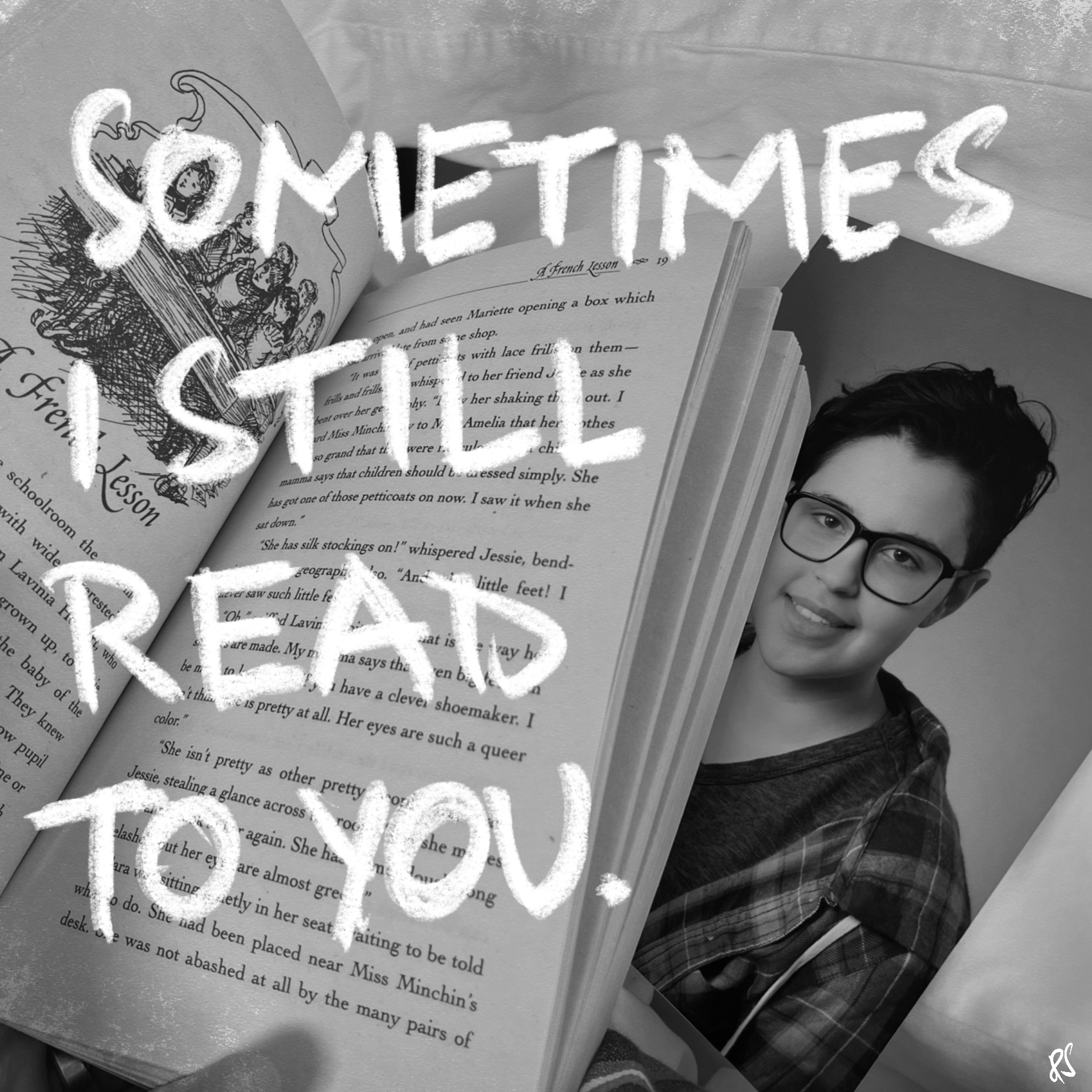
November 12, 2025 - Happy Birthday, Elle.
You'd be 23 years old today. You once told me to tell my story, not yours. I can do that. It starts a couple of days after you left me 7 years ago, when I tried to fall apart.
It’s a story of joy.
I tried to fall apart so the world would see how much you meant to me. I figured the best way to prove you mattered was to become incapable of moving forward without you. So I left mysef fall.
And I almost fell apart it—almost.
As I let go and gave into the grief, I became aware quite suddenly that stretching out beneath me was… oblivion. This was my future, where not even a single glimmer of hope persisted. The blackness was terrifying. This was grief, in its purest form: loss with no hope of recovering, an abyss with no way out. Grief was the inky, suffocating, icy dark of night on the open sea, the inverse of existence, a coldness where the existence turns into nothingness.
Somehow, falling apart had become an exercise in erasing myself. Grief, I learned a moment too late, was not an emotion but a place. An actual, physical place. Why had no one warned me?! Where I had expected to find a more intense version of depression, I found a universe of utter emptiness. And I was falling into it.
I instinctively tried to undo my decision. A ladder of emotions marked my descent, I tried to grab it, to no avail. Happiness was impossibly far above me already. Apathy and anger, too. Even sadness was somehow too high for me to reach: the idea of conjuring a sad song felt so uplifting that I recoiled.
My fall accelerated as I passed the ladder’s lowest rungs. Slimy and broken, these marked my most painful memories, and the mortifying, rueful, grotesque feelings that came with them. Before I knew it, even these were too high to reach. I was past the last rung, in free fall. My only hope was that I hadn’t crossed over into oblivion yet. But it was inevitable now.
Dying would have been preferable to what I experienced in that moment. The abyss was permanent and total. At least in death, my soul would continue.
My mind kept reaching for a way out.
What's worse than my worst pain, I thought.
Someone I love being in pain, I answered myself.
I tried to imagine the people I love hurting. Suffering. Being tortured. I didn't want these things. I was simply trying to exist. To keep existing. Even if it meant feeling the worst thing imaginable, because even that was preferable to the vacuum about to swallow me.
I saw Elle's face. I imagined the pain she'd been in from her CRPS.
And realized, without humor, the irony: this was exactly what put me here in the first place.
I'd come full circle.
There was no way out anymore. I steeled myself for what was coming and stopped trying to fight it. I committed to the last step.
Oblivion opened up just beneath me. I pictured myself with a hand outstretched, like Adam's in Michaelangelo's painting, but not to God. To God's antithesis. I willed myself over the edge: let it be done.
I made contact. A coldness like I’ve never known shot through me.
And then I bounced.
Oblivion did not let me in.
I was flying back up, rebounding back to life—back to a life I didn’t want, to a world where I’d lost my daughter, where—in the simplest terms—I’d failed as a father. It didn’t matter that there had been nothing I could do, my job had been to keep her safe, and that didn’t happen. And now I’d failed at grieving, too. In that moment, I lost any sense of who I was.
But I kept rebounding. I blew right past this life and continued "up" until I found myself in a place of angels. A place where a man who had failed as I had had no business.
This place exuded warmth. Here, I could see things. An angel cradled Elle as I watched. I saw how her birth had expanded my capacity for joy. How her death was expanding my capacity for grief. I had more ability to experience life now, and I was overwhelmed with so much gratitude that appreciation pushed out every other feeling and filled every molecule of my being.
I started to laugh. I was back at my place, curled up on the floor, surrounded by used tissues, laughing that genuine, healing laugh usually reserved for the innocent.
Moments ago, I'd been on the precipice of despair. Now I was filled with joy.
None of it made any sense.
As I returned from my epiphany, my humanity re-engaged. I started trying to talk myself out of what I was feeling:
You can't be happy, you just lost a child.
I’m not happy, I’m joyful.
Still! That emotion would make sense had you lost a grandparent or mentor. But not this!
Yet here I am.
I dismissed my inner critic. Enough, I told it. You will not stop this. Elle gave me a precious gift and I’m going to stay appreciative as long as I can before the pain returns. Bug off.
You’re being selfish by not indulging your pain, the critic told me.
So be it, I replied.
There was something new and refreshing about this internal dialog. I was not attached to my inner critic anymore; more like a witness to it. I did not identify with any of the critic's fears or shortcomings. He lost his power over me. I’d set out to fall apart, yet wound up freeing myself from self-criticism.
What the hell was this day?
I started laughing even harder. I sat for as long as I could in that state of bliss. I memorized it as best I could.
Eventually, I reintegrated with my life of grief and loss. Not because I wanted to, but because that's the nature of this human experience.
I’ve retained my Moment of Joy. More than a memory, it’s become my True North.
I'm lucky. Being able to resonate with joy in the midst of all that pain unquestioningly shortened and shallowed my journey through grief. It showed me that falling apart would push the burden I was feeling onto all the people who loved me. If I fell apart, they’d be forced to grieve two people, and I couldn’t put them through that.
The experience also made life exquisitely more expansive. Now, when my life feels more Romeo & Juliet than Mickey and Minnie, I can swap my perspective, and go from being a character to an audience member—a witness—who’s free to appreciate the tragic tale of Romeo and Juliet as a beautiful work of art.
One thing the critic said is true: the swap does sometimes feel selfish. Society puts a lot of pressure on us to experience loss a particular way, and that way has no space for joy. I’m lucky to have seen for myself that society is wrong on this score.
One day, Elle, I’ll see you again. When I do, I’ll have stories to share from all the adventures I’ve had since losing you. We’ll always have had the chapters we shared. But to let my story end there wouldn’t be the right way to honor you. Your life happened, and it had meaning. It changed me. I’ll honor you by carrying that change forward, and with all my energy, share what I’ve been gifted to make the world more connected and joyful.
I’m so grateful to have shared my life with you, and for the gift you gave me: more life to live.
With truth + empathy—
Jason (Dad)